

What is the impact resistance of UV PVC wall panels?
As a reliable supplier of UV PVC wall panels, I've had the privilege of witnessing their widespread application across diverse projects, be it residential or commercial. One recurrent question that emerges during our interactions with clients is about the impact resistance of these wall panels. In this blog, I will delve into the nuances of the impact resistance of UV PVC wall panels, exploring how it happens and what affects it.
What Are UV PVC Wall Panels?
Before discussing their impact resistance, let's briefly understand what UV PVC wall panels are. PVC, or polyvinyl chloride, is a synthetic plastic polymer known for its versatility, durability, and cost - effectiveness. UV PVC wall panels are enhanced versions of traditional PVC panels. They are treated with a special UV - resistant coating, which not only protects the panel from the harmful effects of ultraviolet rays but also gives it a more vibrant and long - lasting appearance.
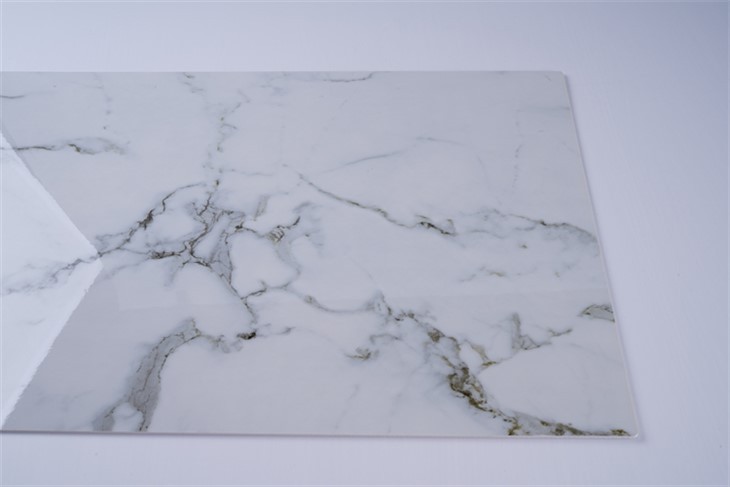
These panels come in a wide range of designs, patterns, and colors, mimicking the look of natural materials such as marble, wood, and stone. For example, our PVC UV Marble Sheet 3mm is a popular choice among customers who aim to add a touch of luxury to their spaces without the high cost and maintenance associated with real marble.
Understanding Impact Resistance
Impact resistance refers to a material's ability to withstand sudden forces or blows without cracking, breaking, or deforming permanently. In the context of wall panels, good impact resistance is crucial in various scenarios. For example, in high - traffic areas such as hallways, corridors, and commercial spaces, wall panels are more likely to be accidentally bumped into by people, furniture, or equipment. A panel with poor impact resistance can quickly develop unsightly cracks or breakages, requiring frequent replacement and increasing maintenance costs.
Factors Affecting the Impact Resistance of UV PVC Wall Panels
1. Material Composition
The base material of UV PVC wall panels plays a significant role in determining their impact resistance. High - quality PVC resin, combined with appropriate additives and stabilizers, can enhance the panel's toughness and elasticity. Additives such as impact modifiers are often incorporated into the PVC formulation. These impact modifiers can improve the material's ability to absorb and distribute impact energy, reducing the risk of cracking.
Our R & D team is constantly researching and innovating to optimize the material composition of our UV PVC wall panels. By using the latest additives and high - grade PVC resin, we are able to produce wall panels with excellent impact resistance, meeting the strict requirements of different application scenarios.
2. Panel Thickness
The thickness of the UV PVC wall panel is another important factor. Generally speaking, thicker panels tend to have better impact resistance. A thicker panel can provide more material volume to absorb and disperse the impact energy.
For instance, our PVC Cladding UV Marble Sheet comes in different thicknesses. Customers who need wall panels for areas with high - risk of impact, such as garages or industrial workshops, often choose thicker panels to ensure long - term durability.
3. Manufacturing Process
The manufacturing process of UV PVC wall panels can also impact their impact resistance. Extrusion is a common manufacturing method for PVC panels. A well - controlled extrusion process can ensure uniform distribution of materials and proper alignment of polymer chains within the panel. This uniformity helps the panel to handle impacts more effectively.
During extrusion, factors such as temperature, pressure, and speed need to be carefully monitored. Any deviation from the optimal manufacturing parameters can result in panels with reduced impact resistance. At our production facility, we use advanced extrusion equipment and strict quality control measures to ensure that each panel meets the highest standards of impact resistance.
4. UV Coating
Although the primary function of the UV coating is to protect the panel from UV radiation, it can also contribute to the overall impact resistance. A well - applied and durable UV coating can act as an additional layer of protection, reducing the direct impact on the base PVC material.
The adhesion of the UV coating to the PVC panel is crucial. If the coating is not well - adhered, it may peel off during an impact, exposing the base material to more damage. Our state - of - the - art coating technology ensures strong adhesion and uniform coverage of the UV coating, enhancing both the aesthetic appeal and impact resistance of the wall panels.
Testing the Impact Resistance of UV PVC Wall Panels
We conduct a series of tests to ensure that our UV PVC wall panels meet the required impact resistance standards. One common test method is the pendulum impact test. In this test, a pendulum with a defined weight and swing is used to strike the panel. The test measures the energy absorbed by the panel before it fractures or experiences significant deformation.
Another test is the drop - ball test. A ball of a specific weight is dropped from a certain height onto the panel. By observing whether the panel cracks or breaks, we can evaluate its impact resistance. These tests are conducted under controlled laboratory conditions to ensure accurate and consistent results.
Benefits of High - Impact Resistance UV PVC Wall Panels
1. Longevity
UV PVC wall panels with high impact resistance are more likely to last longer. They can withstand the wear and tear of daily use, including accidental bumps and knocks, without suffering significant damage. This reduces the need for frequent replacements and saves both time and money for the end - user.

2. Cost - Effectiveness
In the long run, investing in high - impact resistance wall panels is cost - effective. Since they don't require frequent repairs or replacements, the overall cost of ownership is lower compared to panels with poor impact resistance.
3. Aesthetic Appeal
High - impact resistance panels can maintain their aesthetic appeal over time. They won't develop cracks or chips that would otherwise detract from the appearance of the wall. This is especially important in commercial spaces and high - end residential areas where the visual quality of the interior is a key consideration.
Real - World Applications
UV PVC wall panels with good impact resistance have a wide range of real - world applications.
1. Residential Buildings
In homes, they can be used in hallways, kitchens, and children's rooms. In hallways, where people and furniture are constantly moving, the panels need to be able to withstand accidental impacts. In kitchens, they can resist the impact of pots, pans, and other utensils. And in children's rooms, they can endure the rough play and occasional collisions that are common among kids. Our WALL STICKER ,WALL is a great option for residential applications, offering both easy installation and good impact resistance.
2. Commercial Buildings
Commercial spaces such as offices, hotels, and retail stores also benefit from high - impact resistance UV PVC wall panels. In offices, they can protect the walls from the movement of office furniture and equipment. In hotels, they can withstand the constant flow of guests and their luggage. And in retail stores, they can maintain their appearance despite the frequent handling of merchandise.
Conclusion
The impact resistance of UV PVC wall panels is a crucial factor that determines their performance and durability in various applications. Through careful control of material composition, panel thickness, manufacturing process, and UV coating, we are able to produce high - quality wall panels with excellent impact resistance.
If you are considering using UV PVC wall panels for your next project, whether it's a small home renovation or a large - scale commercial construction, we are here to provide you with the best products and solutions. Our team of experts can help you choose the right panel thickness, design, and color to meet your specific needs. Contact us today to start a procurement discussion and take the first step towards transforming your space with our top - notch UV PVC wall panels.
References
- ASTM International. (20XX). Standard test methods for impact resistance of rigid plastic sheeting by means of a falling dart.
- European Committee for Standardization. (20XX). Plastics - Determination of Charpy impact properties.
- Various industry reports and research papers on PVC materials and their properties.